A Marked Loss of Bone Density Frequently Associated With Aging
Some bone is actually lost before age 37 probably beginning as early as age 30 Riggs et al 1981. Bone loss can lead to low bone density osteopenia weakness of the bone and eventually osteoporosis.
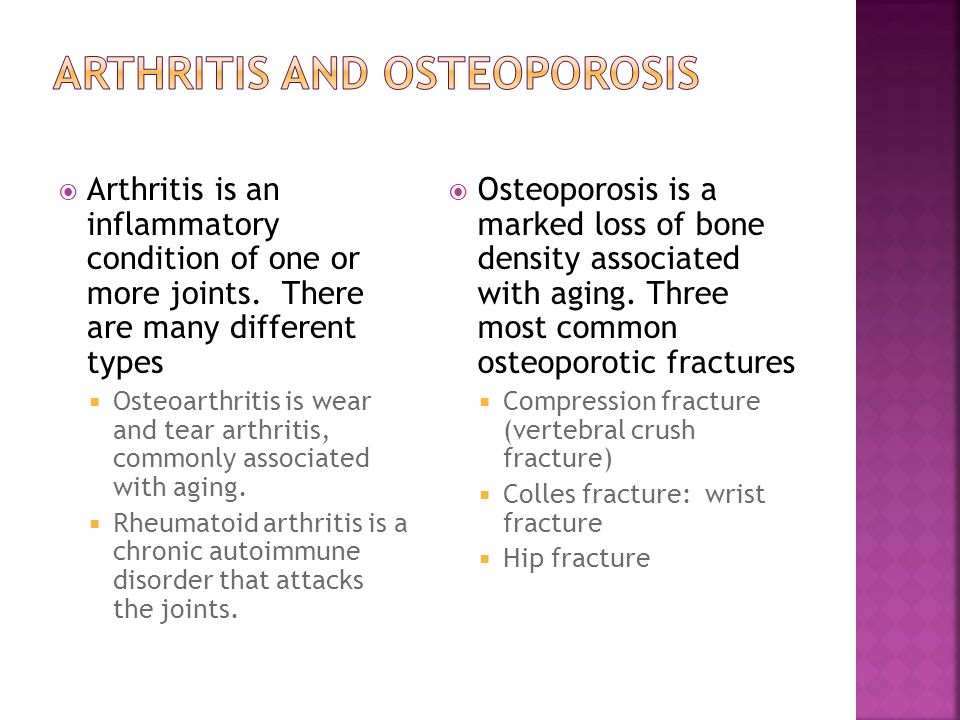
Unit 3 Chapter 3 The Skeletal System Ppt Download
One or more of the vertebrae become so weak that they collapse spontaneously or under minimal stress.

. Osteopenia describes a marked loss of bone density frequently associated with aging. From about age 30 the density of bones begins to diminish in men and women. Reduced bone density of the vertebrae combined with the loss of fluid in intervertebral discs result in a curved and shortened trunk.
Age-related bone loss involves a gradual and progressive decline which is also seen in men. Aging is the most common risk factor for osteopenia. Osteopenia refers to a marked loss of bone densityOsteoporosis refers to a marked loss of bone density and an increase in bone porosity commonly associated with aging.
Marked loss of bone density and an increase in bone porosity associated with aging vertebral crush fractures compression fractures in the spine. Osteoporosis is a common problem among older people especially post-menopausal women and is a major cause of hip fractures in the elderly. Bone mass loss is a condition known as osteopenia.
This loss of bone density accelerates in women after menopause Menopause Menopause is the permanent end of menstrual periods and thus of fertility. However there are a number of medical conditions and medications that can cause more rapid bone loss. For up to several years before and just after menopause estrogen levels fluctuate widely periods become irregular.
Therefore the probability of a person suffering from osteopenia or osteoporosis and related skeletal fragility increases with age. A marked loss of bone density and an increase in bone porosity that is frequently associated with aging. Osteopenia describes a marked loss of bone density frequently associated with age TrueFalse A greenstick fracture is one in which the bone is bent and only partially broken.
The process of bone loss with aging is complex. Your bones are usually at their densest when youre about. With increasing age there is also a significant reduction in bone formation.
Bone mineral density decreases with age. Osteoporotic hip fracture A broken bone usually caused by weakening of the bones due to osteoporosis and can occur either spontaneously or as the result of a fall. False describes an inflammation of the cartilage that connects a rib to the sternum.
The average older woman with normal bone density loses about 13 of her bone density in 10 years or about 13 per year. Markedly increased bone resorption leads to the initial fall in bone mineral density. Osteopenia often progresses to osteoporosis a condition characterized by the reduced bone mineral density and increased rate of bone loss.
A marked loss of bone density and an increase in bone porosity frequently associated with aging. TF Osteopenia describes a marked loss of bone density frequently associated with aging. Any time old bone is broken down faster than new bone is made net bone loss occurs.
After your bone mass peaks your body breaks down old bone faster than it builds new. A marked loss of bone density and an increase in bone porosity that is frequently associated with aging osteo means bone por means small opening and -osis means abnormal condition or disease Term. Primary osteoporosis is associated with the normal loss of estrogen following the menopause as well as age.
Osteopenia describes a marked loss of bone density frequently associated with aging. Osteopenia is when your bones are weaker than normal but not so far gone that they break easily which is the hallmark of osteoporosis. During a persons lifetime the body constantly breaks down old bone through a process called resorption and builds up new bone.
The term meaning the death of bone tissue resulting from insufficient blood flow to an area of bone is __________ __________. November 1 2019. The curves for total skeletal weight as functions of age in men and women ICRP 1992 suggest establishment of maximum bone mass by age 20 with observable bone loss beginning about age 37.
True Osteopenia describes a marked loss of bone density frequently associated with aging. The term secondary bone cancer describes tumors that have spread to bones from other organs such as the breasts and lungs.

Skeletal System Connecting The Body Ppt Download

Pin On Health Wellness
Chapter 3 Pathology The Skeletal System Medical Specialties Related To The Skeletal System Chiropractor Dc Holds A Doctor Of Chiropractic Degree Ppt Download

Exercise Attenuates Bone Mineral Density Loss During Diet Induced Weight Loss In Adults With Overweight And Obesity A Systematic Review And Meta Analysis Sciencedirect
No comments for "A Marked Loss of Bone Density Frequently Associated With Aging"
Post a Comment